

KNOWLEDGE CENTRE
How do extreme temperatures affect battery wear and tear? A practical guide to protecting industrial batteries used in MHE, UPS, solar, and cleaning equipment.
Discover how to retrofit forklifts and warehouse equipment with lithium-ion batteries. Learn about costs, ROI, safety, and key considerations before making the switch.

Understand the GST Reforms on Batteries that bring lead-acid and lithium-ion to a uniform 18 percent and how this interacts with domestic cell incentives and sourcing strategy.
Battery failure explained: Find out why your battery dies early, how to identify common faults, and which charging habits to avoid.
Discover why integrating BMS & IoT in lithium-ion batteries boosts safety, uptime, and cost savings for forklifts and golf carts.
Sulfation is a widespread yet often overlooked issue in the world of lead-acid batteries. Frequently dubbed the “ silent killer” , it operates without obvious warning signs, quietly reducing both battery performance and service life. Whether used in industrial machinery, UPS systems, or off-grid energy storage, sulfation poses a serious risk to any application reliant on reliable battery power. What is Sulfation in Lead Acid Batteries? At its core, sulfation refers to the accumulation of lead sulphate crystals on the battery’s internal plates. This occurs naturally during discharge as the active material on the plates reacts with sulphuric acid. In a properly maintained battery, these crystals dissolve again during the charging process. However, when a battery is left undercharged, stored in a discharged state, or routinely subjected to deep discharge cycles, these sulphate crystals begin to harden. Over time, they become dense and irreversible, severely inhibiting the battery’s ability to hold and deliver electrical charge. What Causes Sulfation in Lead Acid Batteries? Understanding the root causes of battery sulfation is the first step to avoiding it. One of the most common contributors is infrequent or incomplete charging. A battery that is not brought back to a full state of charge after use may retain a residue of sulphate on the plates. This residue becomes the starting point for permanent sulfation, especially if the battery is neglected over repeated cycles. It is not just charging habits either—environmental conditions also play a significant role. High ambient temperatures accelerate the electrochemical reactions inside a battery, increasing the likelihood of crystal formation and growth. In warmer climates, or in confined battery enclosures without proper ventilation, this risk is amplified. Prevention of Sulfation in Lead Acid Batteries Prevention begins with proper charging practices. Always use a smart charger that can automatically adjust the charging voltage and current based on the battery’s state-of-charge. These chargers typically include bulk, absorption, and float stages that ensure a complete and balanced charge. Some models even include pulse or maintenance modes that help dissolve early-stage sulphate deposits, reducing the onset of crystallisation. Routine maintenance is another critical factor. For flooded lead-acid batteries, it’s important to regularly check electrolyte levels and top up with demineralised water when necessary. Low electrolyte levels expose the upper portions of the battery plates to air, causing oxidation and increasing the likelihood of sulphate build-up. In addition to fluid checks, make sure to clean terminal posts, check for corrosion, and tighten connections to ensure efficient current flow. Equalisation charging is a powerful tool in the prevention arsenal. This is a controlled overcharge applied periodically—usually once every 30 to 90 days that helps equalise the voltage between cells and reverses mild sulfation. Equalisation charges are particularly effective in larger battery banks where cell imbalance is common. However, they should only be performed according to the manufacturer’s guidelines, as excessive overcharging can damage the battery. Storage practices also matter. If a battery is left unused for extended periods, it must be stored fully charged and kept in a cool, dry environment. Batteries in storage should be recharged every 60 to 90 days to prevent the slow self-discharge that can lead to sulphate crystallisation. Even sealed lead-acid batteries are vulnerable if stored improperly. While some specialised de-sulfation chargers claim to reverse sulfation through high-frequency pulse technology, their effectiveness is generally limited to early-stage sulphate deposits. Once the crystals become hard and dense, recovery is unlikely, and battery capacity is permanently reduced. Prevention remains far more effective than any attempted cure. The consequences of ignoring sulfation can be expensive. Reduced runtime, increased charging times, and eventual failure can disrupt operations and require premature battery replacement. For businesses, this translates to higher operational costs, increased downtime, and reduced energy efficiency. At UNIK Batteries, we believe that prevention is the smartest investment. By manufacturing high-quality lead-acid batteries and state-of-the-art charging components, we help customers protect their power infrastructure from day one. Whether you operate forklifts , golf carts , maintain a solar backup system , or manage a unit of UPS batteries , we have the right solution to keep you powered and protected from sulfation. Contact us to explore our range of batteries and charging components today!
Build a safe, efficient battery room for lead-acid, lithium-ion & EV batteries. Learn layout, ventilation & charging tips to maximise safety & performance.
Explore the impact of Depth of Discharge (DoD) on industrial battery life. Learn best practices to extend battery lifespan and lower operational costs.
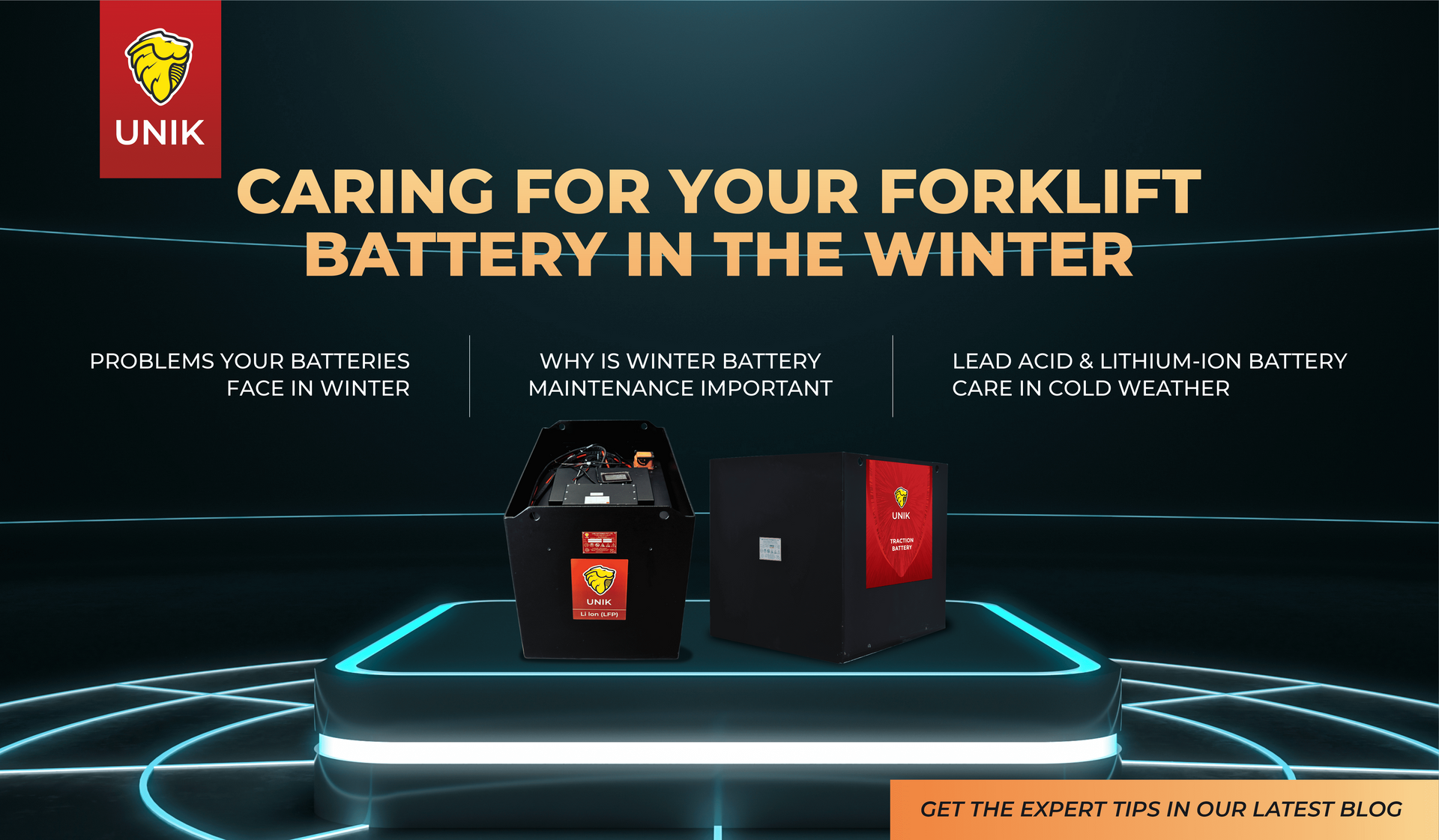
Battery safety is critical in industries relying heavily on robust, dependable power sources such as electric forklifts, golf carts, and industrial machinery. One technology significantly advancing battery safety is heat-sealed battery construction . At UNIK Batteries, we utilise advanced heat-sealing techniques to provide superior safety, reliability, and longer battery life for demanding industrial applications. What Are Heat-Sealed Lead-Acid Batteries? Heat-sealed lead-acid batteries are constructed using a specialised sealing process where battery casings are permanently bonded through heat application. Unlike traditional battery sealing methods using adhesives or mechanical seals, heat sealing creates a highly durable, airtight enclosure, ideal for demanding industrial environments. Key Benefits of UNIK's Heat-Sealed Battery Technology Electrolyte Leakage Prevention Higher resistance levels, which may impact power output. Reduced charging efficiency, resulting in longer charge times. Increased operational strain, potentially leading to faster wear and tear. Here is why winter battery maintenance is essential: Proper care reduces the risk of cell damage due to freezing temperatures. Batteries that are well-maintained offer operational efficiency. Regular maintenance extends the life of your batteries, saving on replacement costs. Taking these steps will keep your i ndustrial forklift battery in peak condition, even when temperatures plummet. Lead Acid & Lithium-ion Battery Care in Cold Weather Maintenance of Lead Acid Batteries Lead acid batteries are more sensitive to cold temperatures because their electrolyte solution can freeze, particularly when the battery is in a low-charge state. For efficient battery care in cold weather, follow these tips: Charge fully after each use as a fully charged lead-acid battery is less likely to freeze. Store batteries in a temperature-controlled environment indoors or in a heated area to protect them from the elements. Inspect the battery for cracks or leaks, as these can worsen in the cold. Lead-acid batteries need adequate water to function correctly, so check and refill water levels routinely. Clean terminals regularly to prevent corrosion and improve conductivity. Lithium-ion Battery Maintenance While lithium-ion batteries fare better than lead acid batteries in colder weather, they still require care to avoid performance drops. Follow these tips for top-notch lithium-ion battery maintenance: When starting your material handling equipment, give your battery some time to warm up just as you would allow your car battery to reach an optimum temperature before driving. Lithium-ion batteries should not be charged at sub-zero temperatures, as this can lead to permanent damage. Lithium-ion batteries are more efficient when they maintain a moderate charge level in winter between 30-80%, to reduce strain on the cells. Following these steps can help ensure that both l ead acid and lithium-ion battery maintenance routines are winter-ready. Winter can be challenging for industrial forklift batteries , but with consistent battery care in cold weather , you can protect your investment and keep your operations running smoothly. By paying attention to winter battery maintenance and adjusting your care strategies for different battery types, you can enhance battery performance and extend its life, no matter how cold it gets. Protect your operations all season long! For more tailored solutions, explore our lithium-ion battery and lead acid battery sections to find the best fit for your material handling operations. Contact us today to learn how our battery solutions can power your success.
When it comes to powering industrial equipment, the choice of battery plays a crucial role in ensuring efficiency and reliability. Traction and semi-traction batteries are key players in this arena, each designed to meet specific operational needs. This blog delves into what these batteries are and their applications in industrial settings. What are Traction Batteries? Traction batteries are specialised rechargeable batteries used to power heavy-duty industrial equipment. Unlike traditional starter batteries, they are engineered to provide reliable and consistent power over extended periods, making them suitable for applications that require deep discharges and frequent recharging. These batteries are typically made up of several cells connected in series, with the most common types being lead-acid traction batteries and lithium-ion . Lead-acid traction batteries are favored for their cost-effectiveness and durability, whereas lithium-ion traction batteries are sought after for their high energy density and lower maintenance requirements. What are the Applications of Traction Batteries? Traction batteries are widely used for rigorous applications in sectors, such as golf carts, renewable energy systems, medical equipment, and power backup systems. Material handling and industrial applications benefit significantly from these batteries. Traction batteries for material handling equipment are used for powering forklifts, pallet jacks, and other material-handling equipment. The high capacity and durability of lead-acid traction batteries and lithium-ion traction batteries make them perfect for these tasks. They ensure reliable performance and longevity in demanding environments, including warehouses and factories that rely on robust power supply. What are Semi-traction Batteries? Semi-traction batteries, also known as monobloc batteries, are engineered for exceptional performance in industrial settings where consistent power is required over extended periods. These batteries are specifically designed to handle repetitive and intense cycle use. A semi-traction battery is constructed with multiple electrically connected cell compartments containing electrodes, electrolytes, terminals, and separators. These cells can be arranged in series or parallel configurations to tailor the battery's performance to specific applications. Semi-traction batteries are engineered to endure harsh conditions, including wide temperature fluctuations (-30°C to 60°C) and exposure to shocks and vibrations. What are the Applications of Semi-traction Batteries? Semi-traction batteries are versatile and provide dependable power for various applications where the energy demand is moderate and consistent, but not as intensive as in heavy industrial use. These batteries are particularly effective in settings where a reliable energy source is needed over an extended period. They may be used for less intensive off-grid solar power systems and energy storage applications. Semi-traction batteries are particularly advantageous in golf carts and industrial cleaning equipment . Golf carts benefit from the battery’s ability to endure frequent discharge cycles, vibrations, and temperature variations, providing reliable power in varied conditions. Similarly, semi-traction batteries excel in industrial cleaning equipment, such as floor scrubbers, where they provide the necessary power to operate efficiently over long periods, withstanding the rough conditions typical in industrial environments. In the world of industrial equipment, the choice between traction and semi-traction batteries can significantly impact operational efficiency and longevity. Traction batteries provide robust, reliable power for heavy-duty applications, such as material handling equipment, while semi-traction batteries offer a dependable solution for moderate energy needs, like those found in golf carts and cleaning machines. By selecting the right type of battery for each specific application, businesses can ensure uninterrupted operations, reduce downtime, and maintain consistent performance in all conditions. UNIK recognises the diverse battery needs of different industries and is here to help you find the perfect fit. Contact us today to learn how our battery solutions can power your success.